Operations leadership

Running the thing, not just building it.

Operations work sits behind the engineering. These are the case studies for that side of it โ€” permits, payroll constraints, safety programs, and the people who have to be somewhere at a specific time for any of it to work.

I bought a ~500-acre motocross park that had been shut down for nine years, spent two years re-permitting it, rebuilding it and running it, and exited by selling my stake to my partners. That was the largest of the operations work โ€” restaurants, a school crossing-guard program covering 33 sites. All of it people-heavy and hands-on: hiring, scheduling, vendor coordination, being the one accountable when something broke at 6am and needed to be working by 7.

I have a GED, not a CS degree. Eighteen months ago I started teaching myself to build software โ€” reverse-engineering undocumented APIs, writing data pipelines and scrapers, shipping web products end to end. Three of them are live. Then that same troubleshooting instinct pointed at a much harder problem: whether a radio's crystal-oscillator imperfections could be measured precisely enough to identify a device from its hardware alone. Getting that right took months of signal- processing work, and it now runs as my apartment's actual security system โ€” not a demo.


Case study

Honey Lake Motocross Park

Founder / Sole Operating Partner ยท Honey Lake Motocross Park, Milford, CA ยท 2016โ€“2018

Acquired a ~500-acre desert motocross park that had been dormant since 2007, re-entitled it for racing, and ran it to a two-day race weekend peaking at 6,500 attendees โ€” with full P&L responsibility and no prior experience in the sport.
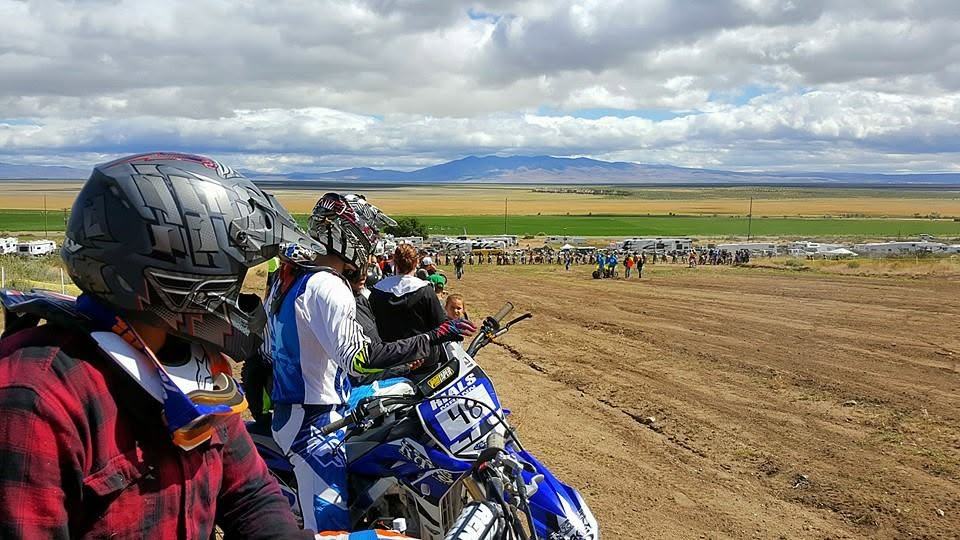
View from the ridge over the pit area during a race weekend at Honey Lake Motocross Park: riders on their bikes in the foreground, rows of RVs and trailers along the valley floor below, mountains on the horizon.

6,500Peak attendance across a two-day race weekend, run by 120 staff, contractors and volunteers on a property with no payroll budget.

~500Acres acquired and returned to operation
1,200Riders at peak weekend
120Staff, contractors and volunteers directed
2007Year the property went dormant before the revival
2023Final annual running of the event founded on site

Honey Lake was two jobs at once. The first was a construction and permitting problem โ€” a property that had been stripped and shut down, in front of a county that had every reason to say no. The second was an operations problem: standing up a workforce, a safety program, and a P&L for an event that had to work correctly the first weekend it ran, in a sport I had to learn from the people who raced in it.

What follows is how both were done.

The property

The park had been closed since 2007. The prior owner had lost county approval to hold races, and stripped the property of its assets before the sale โ€” including all water access, on a site in the high desert where water is the precondition for everything else. What transferred was land, a derelict track, and a bad reputation with the two offices whose sign-off the business depended on.

I bought it with two capital partners. They were the money and the relationship that sourced the money; I was the sole operating owner. Every decision downstream of the purchase was mine to make and mine to answer for.
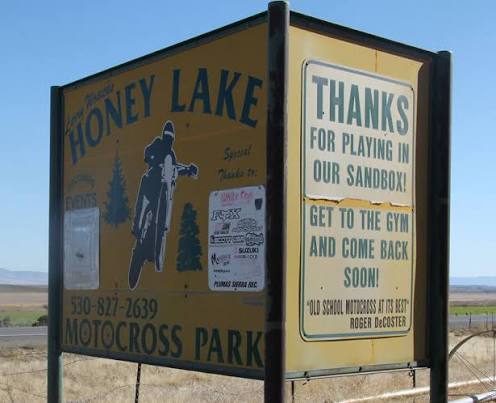
The Honey Lake Motocross Park roadside sign: a painted rider, a phone number, sponsor decals, and a panel reading "Thanks for playing in our sandbox โ€” get to the gym and come back soon," above a Roger DeCoster quote.

Re-entitling the site

Racing could not resume until the county and the sheriff's office were willing to permit it, and both started from active distrust of the address. I rebuilt those relationships in person and over time, then did the work the permits actually required: commissioned a new survey, commissioned an environmental impact review, and drilled a water well โ€” under budget and ahead of schedule.

With water secured I contracted heavy equipment crews to reconstruct the track. A wildfire season ran along the property's ridge during the same window, which meant coordinating with fire authorities and holding a construction schedule against a moving hazard.
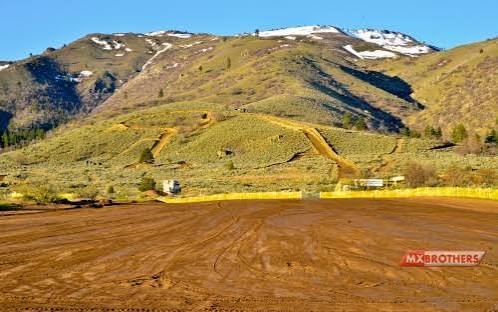
The groomed hard-pack start straight, with the hillside track and snow-capped mountains behind it.
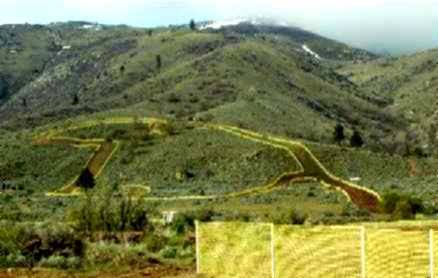
Switchback sections of track cut across the hillside and marked out with course tape.

Learning the sport, and staffing it

I did not come from motocross. I recruited experienced riders as advisors and let them tell me what a track should be, what racers would tolerate, and what would get the park a reputation worth having. I organized community volunteer labor for cleanup and sold sponsorships to fund capital improvements, including bleachers.

There was no payroll budget for event staff, so the volunteer workforce ran on in-kind compensation: ride time, meals, and camping. That was the trade, stated plainly, and it held. At peak I directed 120 staff, contractors and volunteers across a two-day weekend of roughly 6,500 attendees, 1,200 riders, 800 RVs, hundreds of tents and dozens of food trucks.

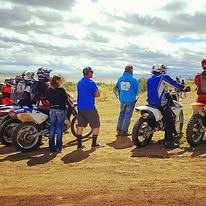
Riders accelerating off the line at the gate drop, throwing dirt behind their rear wheels.
Riders and spectators standing and talking beside a row of parked bikes.

The medical program

I designed and staffed the on-site medical program before it was needed. It was tested when a professional rider was injured mid-event and required a helicopter evacuation. The plan executed without incident: the landing zone was cleared and held while the event was managed around it, and the rider recovered fully.

That documented safety record was central to securing and maintaining liability insurance, which is the constraint that decides whether an event of this size can exist at all.

What outlasted me

During my tenure the park hosted the founding of the Corey Herring Memorial race, in memory of a boy who loved the track. I ran one edition of it. The race continued annually through 2023 โ€” five years after I sold my stake โ€” which is the part that matters: what was built at the property kept running without me.

I held full P&L responsibility throughout: pricing, sponsorship sales, staffing, and marketing. I exited by selling my ownership stake to my partners after becoming a parent.
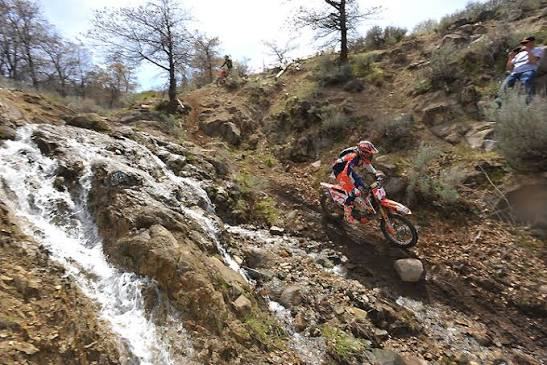
A rider descending a rocky hillside section of the course beside running water, with spectators watching from the bank above.

Case study

School Crossing Guard Operations

Crossing Guard Operations Supervisor ยท All City Management Services (ACMS), Blue Valley USD 229, KS ยท 2023โ€“2025

Ran crossing-guard operations for the southern half of Blue Valley USD 229 โ€” 50 guards across 33 sites, staffed twice a day, which is 66 individual posts to fill every school day. No post went unfilled and no student was injured across the full tenure.

0Students injured across the full two-year tenure. Every child who crossed a staffed post went home.

50Crossing guards hired, trained and managed
33Sites covered, staffed morning and afternoon
66Individual posts to fill every school day
~25Hires over two years against a 50-post roster
5Constituencies coordinated across

Blue Valley USD 229โ€™s southern half, two school years. The operational unit is one adult standing at one intersection at one specific minute, repeated 66 times a day, every day school is in session.

Everything below is about making that number hold.

The coverage problem

Thirty-three sites, each staffed twice a day, is 66 discrete posts that have to be filled before the first bell and again at dismissal. A post is either covered or it isn't; there is no partial credit and no way to defer it to tomorrow. The roster of 50 guards had to absorb illness, weather, car trouble and no-shows without ever producing an empty corner.

The schedule itself was the easy part. The hard part was the difference between the schedule and the morning.

Hiring against churn

Crossing-guard work has notoriously severe turnover as a job category โ€” comparable public programs consistently cite low pay, no benefits and a split shift that eats the middle of the day as the reasons. I made roughly 25 hires over two years against a 50-post roster, so about a quarter of the workforce turned over annually, which is well under what the category normally runs.

Holding it there meant treating recruiting as continuous rather than reactive: interviewing before there was a vacancy, training people properly instead of handing them a vest, and being specific with candidates about what the shift actually is so the ones who took it stayed.

Five constituencies

The job sat at the intersection of five groups with genuinely different incentives: the county sheriff's office, school principals, parents, the district, and the guards themselves. The sheriff cared about traffic enforcement and intersection design. Principals cared about their own bell schedule. Parents cared about one specific corner. The district cared about the contract. The guards cared about hours, weather and being treated like professionals.

None of those were wrong, and they routinely pointed in different directions on the same intersection. Most of the work was translating between them early enough that a disagreement stayed a phone call instead of becoming a complaint.

Same-day coverage

Coverage gaps were solved through relationships, not scheduling software. What actually filled a 7:15 post was a deep bench of people who would take a 6:45 call โ€” in the rain, in January, on twenty-five minutes' notice โ€” because the relationship was worth something to them.

That bench was built deliberately over two years and it is the part that doesn't show up on an org chart. The zero-injury record and the unbroken coverage are downstream of it.